Protect, restore and promote sustainable use of terrestrial ecosystems, sustainably manage forests, combat desertification, and halt and reverse land degradation and halt biodiversity loss
Elsevier, Scientific African, Volume 7, March 2020
Increased demand for food to feed the ever-growing population led to development and adoption of synthetic chemicals as a quick and effective strategy of managing crop pests and diseases.
Elsevier, Wood Microbiology, Second Edition, 2020.
This book chapter advances SDG 15 by presenting the major positive and negative attributes of wood before moving onto a review of the field of biodeterioration and its relation to its origins from Forest Pathology. The roles of various researchers in understanding the nature of deterioration are reviewed to provide context then common terminology related to degradation is reviewed.
Elsevier, Climate Change and Soil Interactions, 2020.
This book chapter advances SDGs 15 and 12 by studying plant–soil interactions in mine degraded reclaimed land which provides an important foundation for restoration ecology.
Elsevier, Plastic Waste and Recycling, Environmental Impact, Societal Issues, Prevention, and Solutions, 2020, pages 223 - 249
This book chapter addresses goals 14, 15, and 12 by exploring the origins of microplastics (relating to our society, production and consumption) and the diverse and harmful impacts of microplastics in the marine environment on life underwater, as well as interactions with humans and other life on land at the end of the cycle.
In 2017, Chioma Blaise Chikere was awarded the second prize of the Green and Sustainable Chemistry Challenge. Her project “Eco-restoration of crude oil-polluted land in Nigeria” demonstrated how organic nutrients such as garden fertilizers and animal excreta can be used to degrade hydrocarbons, cleaning up the soils heavily contaminated by decades of oil spills and advancing SDGs 6, 13 and 15. Three years later, we caught up with Dr. Chikere to learn about her research journey.
Elsevier, World Development, Volume 126, February 2020
With the increasing importance of ‘emerging powers’ in the global economy, questions are raised about the role of developing countries in shaping global norms.
Elsevier, Remote Sensing of Environment, Volume 237, February 2020
Sustainable Development Goal (SDG) indicator 15.1.1 proposes to quantify “Forest area as a proportion of total land area” in order to achieve SDG target 15.1.
Elsevier, One Earth, Volume 2, Issue 1, 2020, Pages 98-108
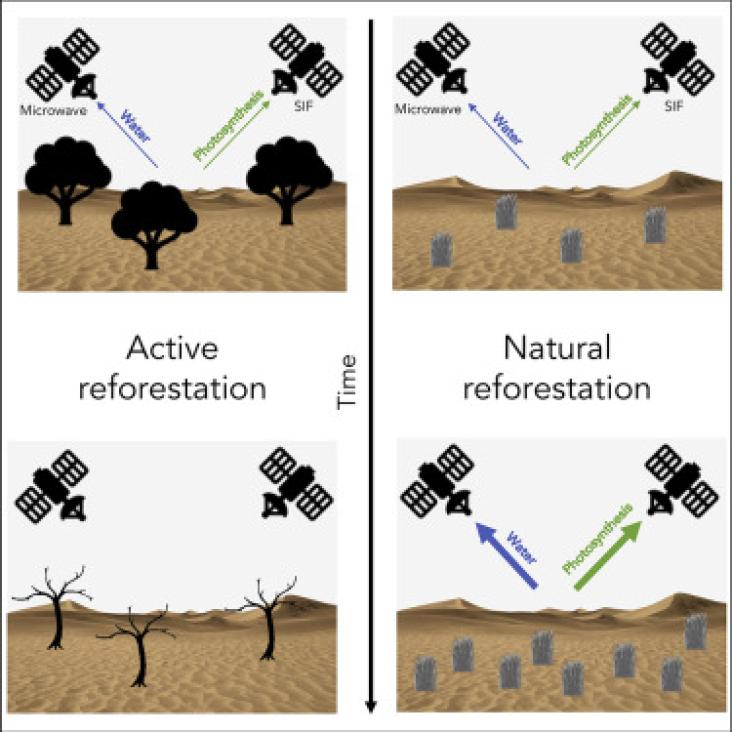
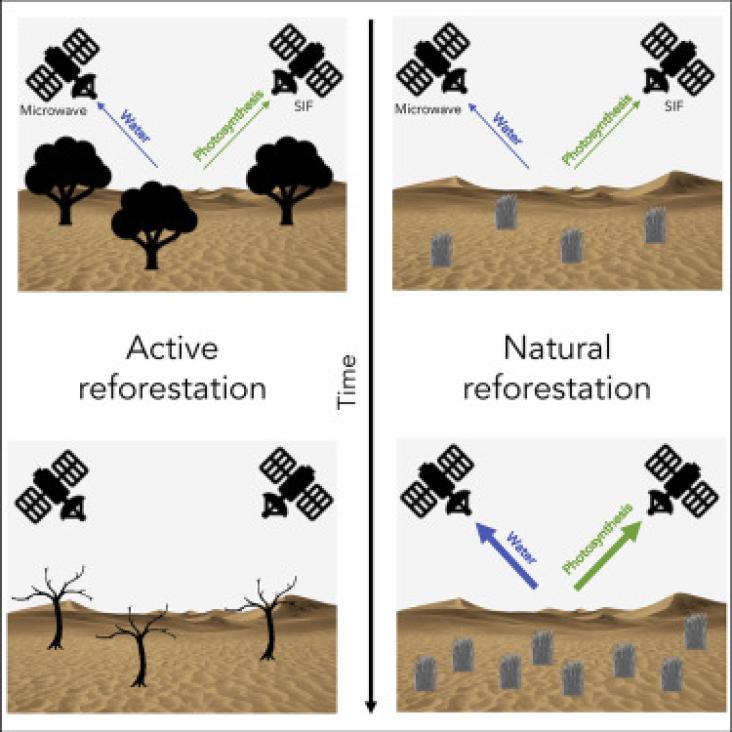
We assess the success of natural reforestation in China's TNSP using satellite data. We use microwaves and SIF to measure water and photosynthesis in dryland vegetation. A strong correlation is found between reforestation and remote sensing data. Natural reforestation is successful at increasing vegetation activity in arid areas
Elsevier, One Earth, Volume 2, Issue 1, 2020, Pages 98-108
In this study, we use a new type of satellite data looking at vegetation water and photosynthesis to compare the success of different reforestation methods, using China's Three-North Shelterbelt Program as a case study.